Evaluating elite residential leasing, private coastal compounds, architectural estate management, and bespoke hospitality programming across international luxury markets reveals an intricate real estate and service ecosystem. Indeed, the global high-net-worth travel sector has evolved far beyond standard hotel room allotments or automated online booking engines. Today, private family offices, corporate leadership teams, and discerning travelers increasingly prioritize private residential estates. Consequently, these standalone compounds offer absolute spatial control, customized culinary staffing, secure perimeters, and deep integration with surrounding natural topographies.
Analyzing elite private residential rentals across global destinations demands looking past promotional photography to inspect the operational infrastructure underneath. A luxury estate positioned along a Mediterranean cliffside, a Caribbean beachfront cay, an Alpine ski ridge, or a Southeast Asian tropical sanctuary must manage complex logistical supply chains. Therefore, estate directors must deploy reliable off-grid utility redundancies, professional security details, advanced wellness facilities, and rigorous property maintenance programs. When a property fails to execute these operational protocols, service breakdowns quickly disrupt the guest experience.
Assessing high-end residential options across regional tourism markets demands evaluating land-to-key ratios, staff-to-guest ratios, leisure asset allocations, and total stay value calculations. When private wealth managers evaluate these properties, learning how to compare luxury villas amenities represents an exercise in risk management and experiential quality control. Understanding how properties manage staff choreography, preserve acoustic and visual privacy, and structure bespoke guest itineraries is essential for securing high-value travel outcomes.
Understanding compare luxury villas amenities
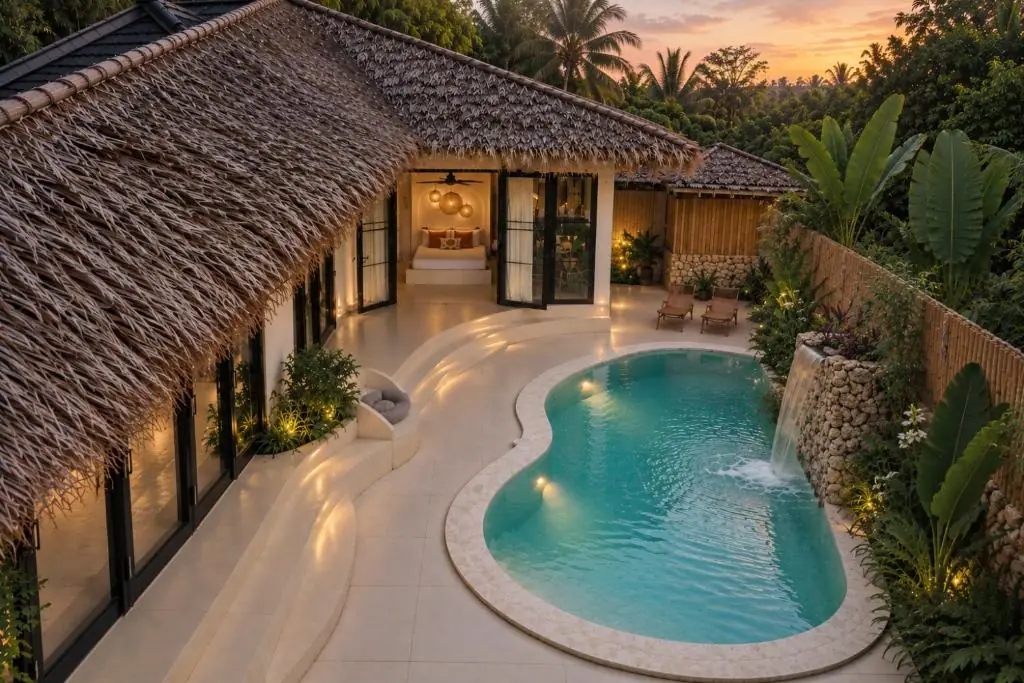
When asset managers and luxury travel directors compare luxury villas amenities, the primary task involves separating public marketing claims from physical property realities. A widespread misunderstanding assumes that any residential property advertised with high-end interior finishes automatically qualifies as an elite estate. In reality, many properties lacking professional management suffer from inconsistent housekeeping, unreliable telecommunications infrastructure, and poor maintenance standards across auxiliary leisure spaces.
Furthermore, analyzing premier private estates requires distinguishing between aesthetic styling and functional operational architecture. A cliffside villa featuring floor-to-ceiling glass walls provides minimal restorative value if the building lacks acoustic insulation, adequate climate control zoning, or private staff quarters. Conversely, a true luxury estate utilizes dedicated back-of-house service corridors, soundproofed structural slabs, and integrated staff management teams that operate completely independent of guest living areas.
In addition, assessing these properties requires understanding how property management agreements and concierge services handle security, wellness spaces, and guest privacy. Managing an elite private estate requires isolating guest residential wings from external service traffic and public sightlines. When a property executes strict spatial separation—ensuring that service entries, security monitoring posts, and leisure pavilions remain logically zoned—it creates a secure environment where high-profile individuals can relax and conduct confidential business.
Deep Contextual Background
The evolution of elite private villa rentals reflects a multi-decade shift from historic family compounds and traditional resort hotels to professionally managed, ultra-exclusive residential compounds. In the mid-twentieth century, private estate leasing was largely restricted to family-owned compounds in Palm Beach, Newport, or European coastal retreats rented informally through personal networks. These historic properties operated with minimal standardized amenities, relying instead on resident domestic staff and static architectural designs.
However, the late twentieth and early twenty-first centuries brought rapid global wealth expansion and the rise of specialized luxury hospitality management brands. High-net-worth travelers began demanding the privacy and space of a private home combined with the rigorous service standards, safety protocols, and concierge support of a five-star hotel. Property owners and developers responded by constructing purpose-built compounds featuring private infinity pools, professional commercial kitchens, wellness spas, heliports, and integrated smart-home automation systems.
In the contemporary landscape, the market for high-end residential rentals has matured into an institutionalized asset class. Modern villa portfolios combine sustainable architectural design, medical-grade air and water purification, secure perimeter surveillance, and private butler teams managed by leading hospitality corporations. By integrating residential privacy with professional hotel-grade operations, premier estates allow guests to experience complete seclusion backed by reliable legal, medical, and logistical support.
Conceptual Frameworks and Mental Models
Navigating the evaluation and selection of elite residential properties requires structured analytical models that account for spatial isolation, leisure infrastructure, and service integration.
The Estate Amenity Hierarchy Index
This framework evaluates a property’s leisure and operational capabilities by assessing core architectural features, wellness infrastructure, and technical redundancies across multi-tiered amenity categories.
The Leisure Service Choreography Model
This model evaluates how effectively an estate manages the operational interface between guests and support staff across three functional leisure layers:
-
Front-of-House Wellness Layer: Butler teams, spa practitioners, and fitness instructors executing unscripted, highly personalized health programming without intruding upon guest sightlines.
-
Back-of-House Operational Layer: Subterranean service tunnels, independent staff entry gates, commercial laundry facilities, and secure staging kitchens.
-
Perimeter and Security Layer: Biometric access control, closed-circuit optical monitoring, and discrete security outposts protecting leisure zones.
Key Categories and Variations
When individuals evaluate and compare luxury villas amenities across diverse regional topographies, properties fall into distinct geographical, architectural, and operational categories. Industry analysts group these flagship assets into six primary variations.
Caribbean Beachfront Compound Amenities
Sprawling coastal estates featuring private deep-water docks, infinity-edge swimming pools, beach cabanas, and open-air dining pavilions.
-
Trade-Offs: This choice delivers warm ocean water, white-sand access, and extensive marine recreation. However, it requires hurricane season mitigation and coastal insect management.
Mediterranean Historic Estate Amenities
Restored historic villas situated across Tuscany or the Amalfi Coast combining terraced olive groves, historic wine cellars, tennis courts, and cliffside plunge pools.
-
Trade-Offs: This option offers rich cultural immersion, wine culture, and historic architectural charm. Conversely, it often features historic stone structures that require careful modernization.
Alpine Ski and Mountain Chalet Amenities
Sprawling timber and stone estates situated directly on ski slopes or high-altitude ridges in Aspen or Verbier, featuring private ski rooms, indoor pools, and saunas.
-
Trade-Offs: This setup provides direct mountain access, winter sports integration, and cozy alpine wellness spaces. Nevertheless, it faces severe winter weather logistics.
Hawaiian Oceanfront Multi-Pavilion Amenities
Resort-style residential compounds across Maui and Kauai featuring separate guest hales, protected tide pools, championship tennis courts, and fitness centers.
-
Trade-Offs: This category provides warm tropical climates and deep cultural experiences. On the downside, it involves long flight transit times.
Tropical Asian Sanctuary Amenities
Sprawling jungle and beachfront compounds across Bali and Phuket featuring dedicated spa pavilions, yoga studios, lap pools, and sunken dining lounges.
-
Trade-Offs: This model delivers exceptional staff-to-guest ratios, deep relaxation, and wellness value. However, it requires tropical climate adaptation.
Private Island and Peninsula Enclosures
Exclusive insular properties offering total territorial privacy, helipads, private marinas, and extensive sports infrastructure.
-
Trade-Offs: This arrangement secures absolute privacy and controlled recreational environments. However, it requires complex boat or helicopter transfer logistics.
Villa Amenity Category Comparison Matrix
Detailed Real-World Scenarios
Analyzing real-world scenarios demonstrates how estate selection, amenity allocation, and operational staffing impact high-stakes private stays.
Evaluating Wellness Infrastructure in a Bali Compound
A health-focused executive family coordinated a two-week retreat in a Balinese sanctuary featuring dedicated spa and fitness pavilions.
-
Constraints: Requirement for daily yoga instruction, hydrotherapy facilities, and organic dietary preparation.
-
Decision Points: When family planners compare luxury villas amenities, the committee evaluated standard rental properties against fully serviced wellness estates.
-
Failure Modes Identified: Standard villas often lack professional spa treatment rooms, forcing guests to hire external therapists and bring portable equipment.
-
Second-Order Effects: Selecting the dedicated wellness estate provided permanent treatment rooms, steam showers, and resident wellness coordinators who managed daily health schedules seamlessly.
-
Resolution: The family achieved their restorative health goals without logistical friction, proving the value of purpose-built wellness architecture.
Managing Sports and Marine Assets in the Caribbean
A multi-generational family booked a premier beachfront compound in the Caribbean for a two-week reunion focused on watersports.
-
Constraints: Need for jet skis, paddleboards, deep-water boat mooring, and certified safety instructors.
-
Decision Points: The family coordinators reviewed property inventories to ensure the estate included private marine dockage and professional safety equipment.
-
Failure Modes Identified: Unvetted properties often advertise water sports equipment that is outdated, unserviced, or lacking required regulatory operating permits.
-
Second-Order Effects: Because the selected estate maintained a private dock and a dedicated marine operations crew, family members enjoyed safe, supervised access to all watercraft.
-
Resolution: The reunion proceeded harmoniously, highlighting the necessity of verifying recreational asset maintenance when comparing property amenities.
Planning, Cost, and Resource Dynamics
Optimizing the selection and leasing of elite private estates requires balancing direct nightly rental rates against mandatory amenity fees, equipment maintenance charges, and staffing retainers.
Direct Versus Indirect Amenity Expenses
-
Direct Costs: Base nightly or weekly rental rates, mandatory amenity surcharges, security deposits, and local lodging taxes.
-
Indirect Costs: Specialized wellness practitioner retainers, marine equipment fuel and charter fees, advanced food and beverage provisioning, and sports instructor fees.
Financial Planning Matrix for Elite Villa Amenities
Tools, Strategies, and Support Systems
Executing seamless stays at premier private estates relies on specialized digital planning tools, private aviation networks, and accredited agency partnerships.
-
Private Aviation and Jet Charter Networks: Coordinating direct private air transfers into local regional airfields to streamline arrival logistics.
-
Specialized Villa Brokerage Networks: Working with luxury travel agencies that audit property amenity conditions and equipment maintenance records.
-
Digital Inventory and Preference Portals: Utilizing advanced software platforms to confirm specific spa, fitness, and entertainment equipment availability prior to arrival.
-
Estate Floorplate and Zoning Audits: Inspecting architectural floor plans to verify that wellness and entertainment pavilions are properly integrated.
-
Pre-Arrival Provisioning Portals: Utilizing digital preference sheets to coordinate specialized athletic gear, wine selections, and pantry stocking.
-
Comprehensive Travel Insurance with Equipment Riders: Securing robust travel insurance policies to protect against recreational equipment damage or injury liabilities.
Risk Landscape and Failure Modes
Failing to properly vet property amenities, maintenance records, and operational terms introduces severe physical and logistical risks during travel execution.
Unserviced Recreational and Marine Equipment
Renting properties featuring swimming pools, hot tubs, or watercraft that lack proper chemical balancing, filtration maintenance, or safety inspections.
Inadequate Wellness and Spa Facility Standards
Occupying estates with poorly ventilated spa rooms, unheated plunge pools, or outdated fitness equipment that fail to meet professional hospitality standards.
Unforeseen Acoustic and Spatial Interference
Selecting estates where noisy entertainment rooms or sports courts are located directly adjacent to private sleeping quarters, compromising guest rest.
Governance, Maintenance, and Long-Term Adaptation
Sustaining luxury and safety standards across elite residential portfolios requires continuous property maintenance, equipment servicing, and rigorous pre-arrival inspections.
-
Pre-Arrival Amenity Protocol: Conduct a 48-hour pre-arrival checklist verifying pool chemical balances, spa heating systems, and sports equipment functionality.
-
Quarterly Staff Maintenance Training Reviews: Evaluate staff technical readiness, equipment servicing schedules, and safety protocols.
-
Layered Estate Maintenance Checklist:
-
Verify that swimming pool filtration and chemical dosing systems operate correctly.
-
Confirm that fitness and spa equipment undergo certified mechanical servicing.
-
Inspect private docks, funicular lifts, and sports courts for wear and tear.
-
Audit entertainment systems, screening rooms, and acoustic insulation panels.
-
Measurement, Tracking, and Evaluation
Assessing the quality and value of a villa stay involves monitoring both quantitative service metrics and qualitative amenity satisfaction signals.
Key Performance Indicators
-
Amenity Uptime Percentage: The percentage of stay duration executed with fully functional pools, spas, fitness centers, and entertainment systems (Target: 100%).
-
Guest Satisfaction Index: Qualitative rating evaluating the quality, cleanliness, and usability of recreational and wellness amenities.
-
Staff Responsiveness to Service Requests: The average time elapsed between reporting an amenity issue and technical resolution (Target: < 2 hours).
Common Misconceptions and Oversimplifications
All Listed Amenities Are Included in the Base Rate
Many luxury residential properties list extensive amenities like private boats, helicopter charters, or spa therapists that require separate hourly or daily fees.
Promotional Photography Reflects Current Equipment Conditions
Promotional imagery often captures amenities immediately post-construction; rigorous third-party agency inspections are necessary to verify current maintenance standards.
Private Gyms Equal Commercial Fitness Facilities
Residential fitness rooms often feature limited free weights and cardio machines rather than comprehensive commercial-grade training inventories.
Luxury Pool Amenities Guarantee Child Safety
Stunning infinity pools and water features frequently lack automated pool covers or safety fencing unless specifically requested and installed.
Ethical, Practical, or Contextual Considerations
Operating and leasing luxury private estates in delicate coastal, alpine, or island ecosystems carries significant environmental and social responsibility. Estate owners and management agencies must balance high-net-worth leisure luxury with local ecological conservation, water stewardship, and community respect. Sustainable amenity management practices—such as utilizing solar pool heating, implementing graywater recycling, sourcing organic local produce, and employing local staff fairly—ensure that private residential compounds harmonize with their host communities. Respecting local culture and environmental limits transforms elite villa leasing into a sustainable, highly responsible sector of travel.
Conclusion
Evaluating how to compare luxury villas amenities requires an analytical approach that connects architectural design, wellness infrastructure, recreational maintenance, and operational risk management. Relying solely on promotional imagery or unvetted booking platforms exposes travelers to operational failures, unserviced equipment, and compromised leisure quality. Conversely, by evaluating amenity hierarchies, auditing technical maintenance records, leveraging accredited brokerage networks, and verifying pre-arrival provisioning, travel directors ensure complete operational control and extraordinary stay quality. Ultimately, thorough property auditing and rigorous operational planning transform private estate leasing into an effortless, deeply restorative, and secure experience.