Evaluating elite residential leasing and architectural estate management across domestic United States markets reveals an intricate real estate ecosystem. Indeed, the domestic high-net-worth travel sector has evolved far beyond standard hotel room allotments. Today, private family offices and corporate leadership teams increasingly prioritize private residential estates. Consequently, these standalone compounds offer absolute spatial control and customized culinary staffing.
Analyzing elite private residential rentals across North American destinations demands looking past promotional photography. A luxury estate positioned along a secluded California cliffside or a Hawaiian volcanic coast must manage complex logistical supply chains. Therefore, estate directors must deploy reliable off-grid utility redundancies and professional security details. When a property fails to execute these operational protocols, service breakdowns quickly disrupt the guest experience.
Assessing high-end domestic residential options across regional tourism markets demands evaluating land-to-key ratios and staff-to-guest ratios. When private wealth managers evaluate luxury luxury villas usa, the process represents an exercise in risk management. Understanding how properties preserve privacy is essential for securing high-value travel outcomes.
Understanding luxury luxury villas usa
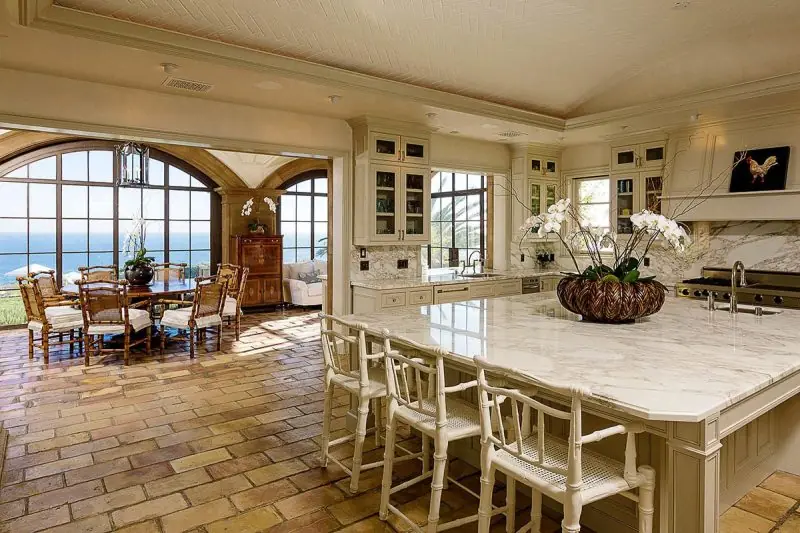
When asset managers evaluate luxury luxury villas usa, the primary task involves separating public marketing claims from physical property realities. A widespread misunderstanding assumes that any residential property advertised with high-end finishes qualifies as an elite estate. In reality, many properties lacking professional management suffer from inconsistent housekeeping and poor maintenance standards.
Furthermore, analyzing premier private estates across North America requires distinguishing between aesthetic styling and operational architecture. A cliffside villa featuring glass walls provides minimal value if the building lacks acoustic insulation. Conversely, a true luxury estate utilizes dedicated back-of-house service corridors and soundproofed structural slabs.
In addition, assessing these properties requires understanding how property management agreements handle guest privacy. Managing an elite private estate requires isolating guest residential wings from external service traffic. When a property executes strict spatial separation, it creates a secure environment where high-profile individuals can conduct confidential business.
Deep Contextual Background
The evolution of elite private villa rentals across the United States reflects a multi-decade shift toward professionally managed residential compounds. In the mid-twentieth century, private estate leasing was restricted to family-owned compounds in Palm Beach or Malibu. These historic properties operated with minimal standardized hospitality services.
However, the late twentieth century brought rapid domestic wealth expansion and specialized hospitality management brands. High-net-worth travelers began demanding the privacy of a private home combined with the service standards of a five-star hotel. Property owners responded by constructing purpose-built compounds featuring private infinity pools and professional kitchens.
In the contemporary landscape, the market for luxury luxury villas usa has matured into an institutionalized asset class. Modern portfolios combine sustainable architectural design and secure perimeter surveillance. By integrating residential privacy with hotel-grade operations, premier domestic estates allow guests to experience complete seclusion.
Conceptual Frameworks and Mental Models
Navigating the selection of elite residential properties across the United States requires structured analytical models that account for spatial isolation and staffing ratios.
The Estate Privacy and Isolation Index
This framework evaluates a property’s physical privacy by assessing boundary acreage and visual screening levels to guarantee zero light pollution across private terraces.
The Service Choreography Matrix
This model evaluates how effectively an estate manages the operational interface between guests and support staff across three functional layers:
-
Front-of-House Service Layer: Butler teams and private chefs executing personalized hospitality without intruding upon guest sightlines.
-
Back-of-House Operational Layer: Subterranean service tunnels, independent staff entry gates, and secure staging kitchens.
-
Perimeter Security Layer: Biometric access control and closed-circuit optical monitoring protecting the estate perimeter.
Key Categories and Variations
When individuals evaluate luxury luxury villas usa across diverse regional topographies, properties fall into distinct operational categories. Industry analysts group these flagship assets into six primary variations.
Hawaiian Island Pacific Compounds
Sprawling resort compounds situated across Maui and Kauai combining volcanic coastlines and open-air pavilion architecture.
-
Trade-Offs: This choice delivers warm ocean water and tropical climate. However, it requires long flight transit times.
Southern California Blufftop Estates
Architectural compounds perched along elevated bluffs in Malibu, featuring Pacific panoramas and modernist glass framing.
-
Trade-Offs: This option offers low humidity and dramatic architecture. Conversely, it faces cool ocean water temperatures and morning fog layers.
Florida Keys and Subtropical Cays
Secluded island compounds located in South Florida featuring private deep-water docks and turquoise waters.
-
Trade-Offs: This category provides direct marine access and boating infrastructure. On the downside, it requires hurricane season mitigation.
Alpine Ski and Mountain Chalets
Sprawling timber and stone estates situated directly on ski slopes in Aspen or Vail.
-
Trade-Offs: This setup provides direct mountain access and winter sports integration. Conversely, it faces severe winter weather logistics.
New England Historic Maritime Manors
Seasonal hideaways across Cape Cod and Nantucket emphasizing classic shingle-style architecture.
-
Trade-Offs: This style features rich historic character and high privacy. However, it operates under short summer seasons.
Desert Canyon and Mesa Pavilions
Horizontal compounds engineered for arid canyon floors across Scottsdale and Palm Springs.
-
Trade-Offs: This model delivers striking geological views and thermal mass stability. Nevertheless, it requires intensive mechanical cooling.
Domestic Luxury Villa Category Comparison Matrix
Detailed Real-World Scenarios
Analyzing real-world scenarios demonstrates how estate selection and operational staffing impact high-stakes domestic private stays.
Managing an Executive Retreat in Aspen
A technology conglomerate required a private alpine compound in Aspen to host a strategic executive summit during winter ski season.
-
Constraints: Strict requirement for zero media visibility and 24-hour private culinary service.
-
Decision Points: When corporate planners evaluate luxury luxury villas usa for business summits, the committee chose a private alpine chalet over a hotel buyout.
-
Failure Modes Identified: Hotel buyouts expose executives to public ski lodge traffic and casual onlookers.
-
Second-Order Effects: Selecting the private chalet allowed security teams to lock down perimeter access points.
-
Resolution: The summit concluded with zero security breaches, proving the value of private mountain compounds.
Overcoming Logistics at a Blufftop Estate in Malibu
A family office principal booked a blufftop estate in Malibu for a multi-generational family reunion.
-
Constraints: Strict arrival schedule and accessibility needs for elderly family members.
-
Decision Points: The estate management team established pre-planned van transfers and installed temporary ramp access.
-
Failure Modes Identified: Heavy highway traffic and steep terrain present severe mobility challenges.
-
Second-Order Effects: Because transport was pre-arranged, the family bypassed traffic bottlenecks safely.
-
Resolution: The family enjoyed uninterrupted holiday timing, highlighting the necessity of integrated logistical support.
Planning, Cost, and Resource Dynamics
Optimizing the selection and leasing of elite private estates across the United States requires balancing direct rental rates against service fees.
Direct Versus Indirect Estate Expenses
-
Direct Costs: Base nightly rental rates, staff gratuities, security deposits, and local lodging taxes.
-
Indirect Costs: Private aviation transfers, advanced food provisioning, and specialized security personnel.
Financial Planning Matrix for Domestic Elite Villa Rentals
Tools, Strategies, and Support Systems
Executing seamless stays at premier private estates across the United States relies on specialized digital mapping tools and private aviation networks.
-
Private Aviation Networks: Coordinating direct private air transfers into local regional airfields to bypass commercial airport congestion.
-
Specialized Brokerage Networks: Working with accredited luxury estate agencies that conduct physical property audits.
-
Secure Communication Portals: Verifying high-speed encrypted internet connectivity for remote work.
-
Estate Floorplate Audits: Inspecting architectural floor plans to verify staff quarter segregation.
-
Pre-Arrival Provisioning Portals: Utilizing digital preference sheets to coordinate custom wine cellars and pantry stocking.
-
Comprehensive Travel Insurance: Securing robust travel insurance policies to protect against natural disasters.
Risk Landscape and Failure Modes
Failing to properly vet property management and contractual terms introduces severe operational risks during domestic stays.
Unverified Property Management
Booking through unverified online portals that list properties without professional management, resulting in broken amenities.
Inadequate Utility Redundancies
Reserving remote mountain estates that lack backup generators, leading to power failures during regional storms.
Unforeseen Security Vulnerabilities
Selecting estates with malfunctioning surveillance cameras, compromising personal privacy.
Governance, Maintenance, and Long-Term Adaptation
Sustaining standards across elite domestic residential portfolios requires continuous property maintenance and pre-arrival inspections.
-
Pre-Arrival Protocol: Conduct a 48-hour checklist verifying all HVAC systems and security cameras.
-
Quarterly Staff Audits: Review guest feedback to ensure adherence to hospitality standards.
-
Layered Maintenance Checklist:
-
Verify that backup diesel generators function correctly.
-
Confirm that water purification systems meet health standards.
-
Inspect perimeter security gates and optical sensors.
-
Audit private sports equipment for mechanical safety.
-
Measurement, Tracking, and Evaluation
Assessing the quality of a domestic elite villa stay involves monitoring quantitative service metrics and qualitative signals.
Key Performance Indicators
-
Staff Responsiveness Index: The average time elapsed between a guest request and execution, targeted under ten minutes.
-
Net Incurred Service Value Ratio: The tangible value captured through included chef services relative to rental spend.
-
Infrastructure Uptime Percentage: The percentage of stay duration executed with uninterrupted power, targeted at one hundred percent.
Common Misconceptions and Oversimplifications
Villa Rental Versus Hotel Suites
When traveling with large family groups, renting a private estate often costs less per person than booking multiple hotel suites.
Staff Inclusions in Rentals
Many residential properties are rented as empty real estate, requiring guests to hire chef teams independently.
Infrastructure Resilience in Remote Locations
Remote mountain estates rely on local grids, making them vulnerable to severe winter storms.
Promotional Photography Accuracy
Promotional photography is often captured post-construction; third-party inspections are necessary to verify current conditions.
Ethical, Practical, or Contextual Considerations
Operating luxury private estates in delicate ecosystems across the United States carries significant environmental responsibility. Estate owners must balance luxury with ecological conservation and community respect. Sustainable practices—such as utilizing solar microgrids and employing local staff fairly—ensure that residential compounds harmonize with host communities. Respecting local environmental limits transforms elite villa leasing into a sustainable sector of domestic travel.
Conclusion
Evaluating luxury luxury villas usa requires an analytical approach that connects architectural design, spatial privacy, and risk management. Relying solely on promotional imagery exposes travelers to service inconsistencies. Conversely, by evaluating privacy indices and verifying utility redundancies, travel directors ensure complete operational control. Ultimately, rigorous operational planning transforms private estate leasing into a secure and restorative experience.